
As the workforce continues to evolve, so do employee expectations. Today’s professionals are seeking not just competitive pay but fairness, transparency, and alignment between effort and reward. This makes compensation analysis a mission-critical function for organizations of every size. When leveraged strategically, it goes far beyond benchmarking salaries – it becomes a tool for optimizing retention, enhancing equity, and supporting sustainable growth.
Understanding Compensation Analysis: More Than Just Numbers
At its core, compensation analysis is a structured evaluation of how your company compensates its employees in comparison to internal standards and external market data.
A thorough analysis includes assessing base salaries, bonuses, benefits, and incentive plans against similar roles in the same industry and geographic location. It also evaluates pay range market pricing, identifying whether your current structures are aligned with expectations or falling short. This process is typically led by internal HR teams or certified compensation consulting experts who provide objective, data-driven insights to support strategic decisions.
Beyond raw salary comparisons, compensation analysis plays a vital role in identifying internal inequities and compliance risks. With increasing attention on pay transparency and equitable compensation, employers cannot afford to rely on outdated assumptions to retain and attract high performers.
The Strategic Value of HR Compensation Reviews
Businesses that conduct regular HR compensation reviews are better positioned to retain top talent and attract new candidates in today’s competitive market.
Reviews give leaders a clear view into:
- Employee pay relative to market norms
- Disparities based on role, location, or tenure
- Opportunities to incentivize critical skill sets
By utilizing outsourced certified compensation consultant reviews, companies can proactively adjust to market shifts, reward performance equitably, and maintain compliance with current labor regulations. These regular reviews also play a pivotal role in designing a future-ready compensation plan, helping HR teams and executives forecast salary trends and make budget-conscious decisions.
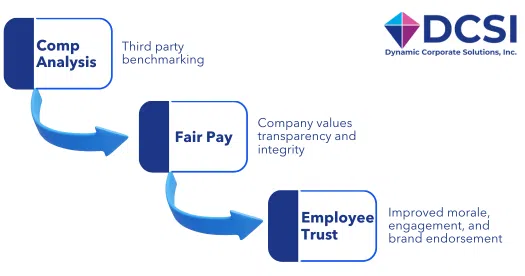
Companies that share with their employees that they use third party compensation benchmarking processes demonstrate their commitment to pay transparency which strengthens employee trust and therefore leads to improved morale, engagement, and brand endorsement.
How Compensation Analysis Supports Retention and a Culture of Equity
As retention continues to be a key focus for growing businesses, compensation remains one of the strongest levers to reduce attrition. Employees who feel underpaid – or see inconsistencies in compensation practices – are far more likely to explore external opportunities.
This is especially true in companies that have not standardized compensation practices across roles, departments, or locations. Compensation analysis enables organizations to address these blind spots and promote internal equity by aligning pay practices with role complexity, performance, and market conditions.
Best in class organizations are committed to proactively identify and correct gender pay gaps or racial disparities because it’s the right thing to do. This not only protects the organization from compliance risks but also fosters a culture of fairness and accountability.
Why Partnering with a Compensation Consulting Firm Delivers ROI
While internal HR teams can perform basic salary reviews, most companies benefit from partnering with a compensation consulting firm – especially during periods of growth, restructuring, or mergers and acquisitions.
Consultants provide:
- Access to proprietary market data
- Customized incentive plan design
- Objective pay range modeling
- Compliance and audit support
These partners bring specialized tools and industry expertise to the table, ensuring your strategy is not only competitive but also strategically aligned to your business goals. By integrating compensation analysis into your broader talent strategy, your company becomes more agile and better equipped to compete for top talent in any labor market.
Frequently Asked Questions (FAQ)
{How do you discuss salary reviews?}
{How long should a salary review take?}
{How often is compensation reviewed?}
{How to measure compensation management?}
Final Thoughts
For any business committed to long-term success, compensation analysis should be a recurring, data-driven process – not an afterthought. It supports everything from compliance and equity to retention, performance, and employer branding. Whether you’re designing a compensation plan from scratch or refining existing structures, partnering with a credible, seasoned compensation consulting firm ensures your approach is proactive, equitable, and market-aligned.
In today’s talent-driven economy, companies that treat compensation as a strategic asset – not just an expense – are the ones that win.